.jpg)
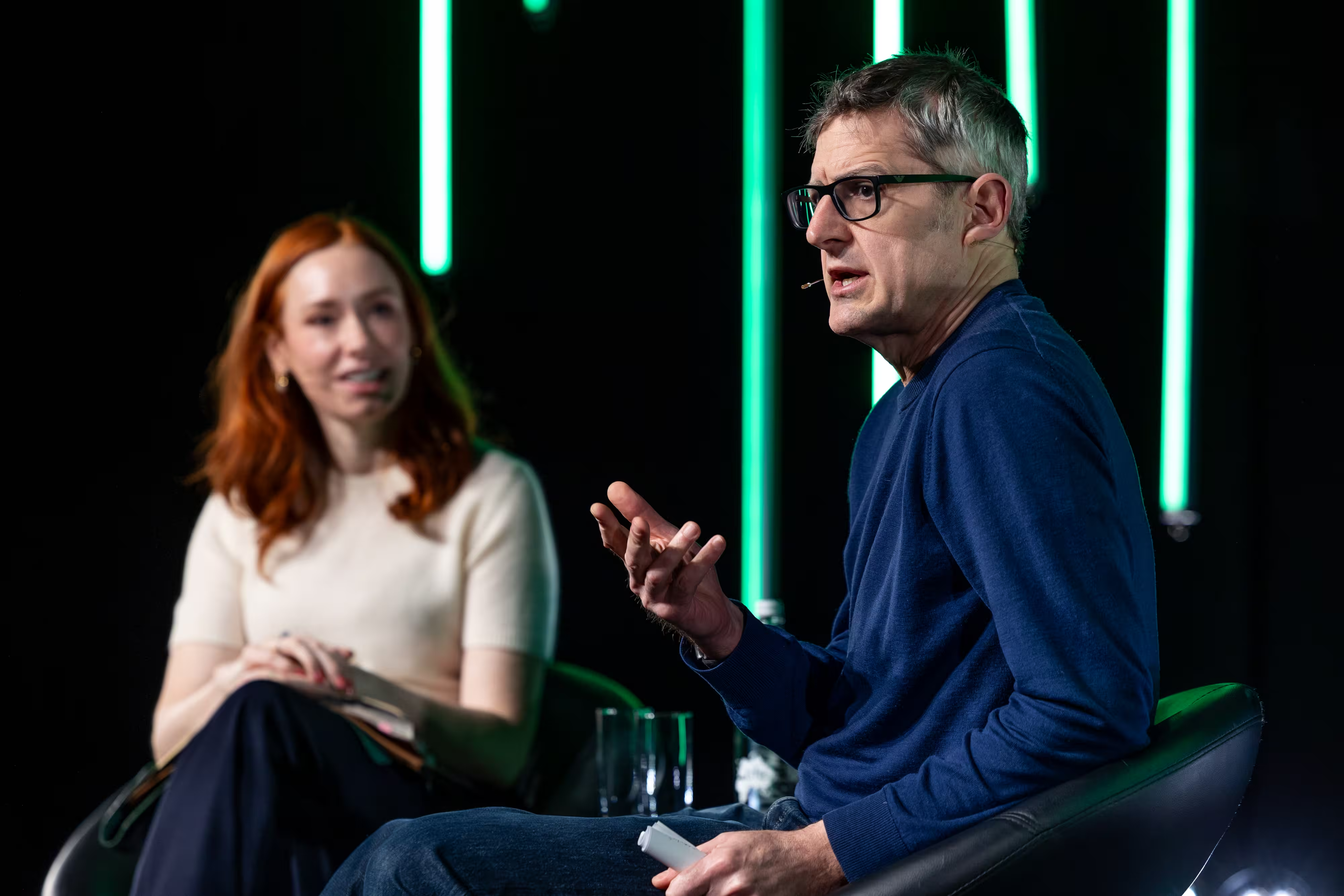
Across two days at Tech Show London, one theme kept surfacing across stages and panels. Technology may be evolving quickly, but the most important questions are still about people.
From AI bias and data infrastructure to motorsport analytics and online culture, the conversations highlighted how the systems we build are deeply shaped by human behaviour, access and decision-making.
When technology meets human behaviour
The opening mainstage session between mathematician Hannah Fry and Louis Theroux explored the intersection between technology and human behaviour.
The discussion ranged from online subcultures such as the “manosphere” and looksmaxing communities to changing relationships between people and AI systems.
As AI becomes more embedded in everyday life, the line between digital tools and human interaction continues to blur. From algorithmic decision-making to emotional connections with AI models, the conversation highlighted how technology increasingly mirrors the complexity of human society.
Understanding both sides of that relationship will become critical as AI systems continue to scale.
Breaking the cycle of bias in AI
Another major theme across the event was representation within the AI industry.
Our own panel exploring gender bias highlighted that women currently represent only a fraction of technical roles across major technology companies. When development teams lack diversity, the systems they build can reflect those same gaps.
Speakers stressed that addressing bias requires changes beyond the technology itself. It involves improving representation across the people designing, training and communicating AI systems.
Ultiamtely, what you feed into an AI model is what it produces.
Scaling technology under pressure
Infrastructure and scale were also recurring topics.
Reddit CTO and founding engineer Chris Slowe shared lessons from building systems that could evolve from early-stage code into platforms capable of supporting global communities.
Formula 1 offered a different perspective on high-performance infrastructure. Ryan Kirk, Head of Cloud and DevOps, explained how automation and cloud-native systems help support race operations. With only around 20% of the year available for trackside development, efficiency and reliability are essential.
The same theme continued in discussions about AI in motorsport. Teams now generate around a terabyte of data during a race weekend, with insights used across strategy, performance and engineering.
Rather than replacing human expertise, AI is augmenting it.
Trust, storytelling and the AI narrative
In our own session The Jaws Effect: How Bad Storytelling Is Feeding AI’s Fear Machine, speakers examined how dramatic narratives about AI risk overshadowing the reality of how the technology is actually used.
The panel argued that trust will become one of the defining factors in AI adoption. As Archie Cobb noted, “Trust is the modern day currency.”
For organisations adopting AI, transparency and responsible communication will be just as important as the technology itself.
Building a more inclusive tech future
Finally, several sessions turned to the future of talent in the technology sector.
Only one in four people working in tech today are women, and many are considering leaving the industry. Speakers highlighted the need for earlier exposure to technology careers and more inclusive pathways into the sector.
As Emily Hall-Strutt from Next Tech Girls put it, the challenge is not a confidence gap. The system itself needs to change.
Across Tech Show London, the message was clear. The future of technology will not be defined only by faster systems or smarter algorithms, but by who gets to build them and the values embedded within them.
Download Here
Download Here
Let's Talk
Propeller Group
60 Margaret Street
London W1W 8TF