
Retail media’s growth is showing no signs of slowing down. WPP Media forecasts it will reach $250 billion by 2030. However, bigger budgets come with greater scrutiny, particularly around how to measure incremental sales and how to understand accelerating changes in customer behaviour.
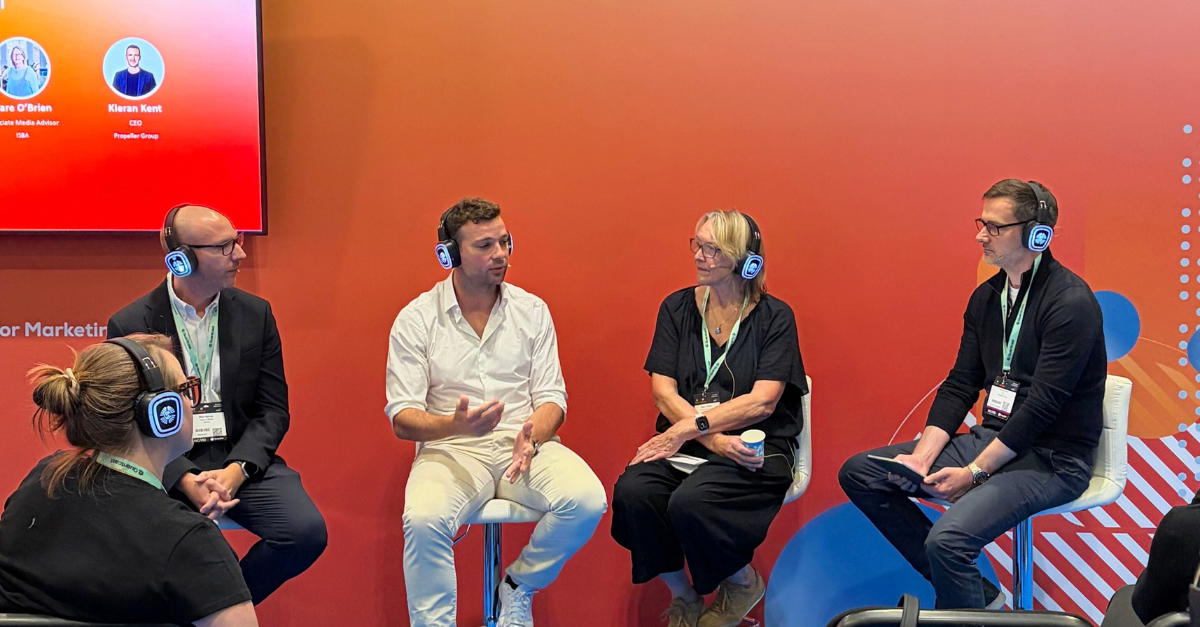
Propeller’s panel at the Ecommerce Expo show explored these challenges and more. The session was moderated by Propeller Group CEO Kieran Kent and featured insights from:
- Mike Hyman, Head of Media at Henkel
- Alex Knapman, Consulting Director at SG-retail
- Clare O’Brien, Associate Media Advisor at ISBA
The importance of standardisation
As retail media spend continues to grow, the industry has to address a fundamental problem: how can advertisers scale their activity when individual retail media networks operate using completely different frameworks?
For Clare O’Brien, addressing this fragmentation is critical to unlocking the channel’s full potential. “It’s estimated that retail media will account for 20% of total global retail advertising by 2030 - but this is only possible if advertisers can scale their purchases. And this isn’t viable if they have to draft different agreements for every network they partner with. That’s why the next phase of work needs to be consolidation - first on definitions, then on measurement.”
However, standardisation is only one part of the equation. Retailers must also consider how retail media fits within their wider businesses and the experiences customers have come to expect.
Alex Knapman argued that while retailers are increasingly operating like traditional media owners, there is considerable variation in how far individual networks have progressed.
“We’re seeing huge variability depending on the maturity of the retailer and the retail media network. The key for retailers is to work out what their DNA is; what do they stand for? This informs how they create their network.
“For example: Harrods and Selfridges need to be incredibly careful when creating an ad proposition because they curate luxury experiences, and any interruption can be incredibly jarring for consumers. Conversely, value retailers that build their proposition around being the cheapest on the market have more flexibility and can afford to have a slightly clunkier consumer journey.”
Moving beyond the brand versus performance debate
Retail media has historically been associated with driving conversions at the point of purchase. However, as networks expand their capabilities onsite, offsite and via Connected TV (CTV), advertisers have an opportunity to engage consumers throughout the purchase journey.
For Mike Hyman, this opens the door to using retail media to achieve objectives beyond immediate sales. He said that with Henkel’s Bloo brand, the business sought to create a full-funnel approach.
“Rather than just creating penetration for our brand, we sought to drive penetration for the industry as a whole.
“What’s been really important is the measurement. All retailers approach it slightly differently, both in terms of their method and their window of attribution. We’ve underpinned everything with addressable media; each audience segment received a different CTA depending on which stage of the funnel they were at, with reporting enabling us to continuously optimise and improve.”
O’Brien suggested that the industry needs to stop treating brand building and performance as competing priorities.
“It’s time to get rid of the versus. Stop looking short-term versus long-term. Everyone wants immediate results, but over time these should ladder-up to brand equity. Performance and brand have very specific jobs to do. The key is to understand when it stops being performance and starts being brand and how the former impacts the latter.”
Knapman pointed to the increased digitisation of retail environments as an opportunity to deliver brand-building experiences at the moment of conversion.
“These new digital surfaces enable you to improve your storytelling capabilities. After all, you can do more with a screen than you can with a static poster. The rollout of new mediums accelerates that shift, as you’re now able to conduct brand-building activations at the point of purchase. That means that you not only see an uptick in sales - but also drive lifetime value or increase brand salience.”
Final thoughts
To wrap up the session, each panellist was asked to share their thoughts on what needs to change for retail media to realise its full potential.
Knapman argued that the first step should be to move beyond traditional performance vanity metrics. “ROI and ROAS only provide a snapshot of overarching campaign performance. Measurement should be anchored around whether you’ve grown your mental and physical availability. In other words, how easy is it for consumers to recognise your brand and what it does - and acquire your products.”
Hyman shone the spotlight on the in-housing versus outsourcing debate, stressing the importance of a connected approach. “Internally, we retain the strategic core of the business, setting objectives and spend. We then rely on our retail media partners to help plan measurement and activation to maximise impact.”
Finally, O’Brien called for retailers and brands to elevate discussions beyond those directly responsible for retail media . “Ultimately, we need more collaboration across organisations, with conversations between retailers and brands taking place at a more senior level. While those working on the ground understand the technical complexities, retail media is still treated as a specialist discipline. We need a bigger-picture perspective, driven from the top down.”
Download Here
Download Here
Let's Talk
Propeller Group
60 Margaret Street
London W1W 8TF